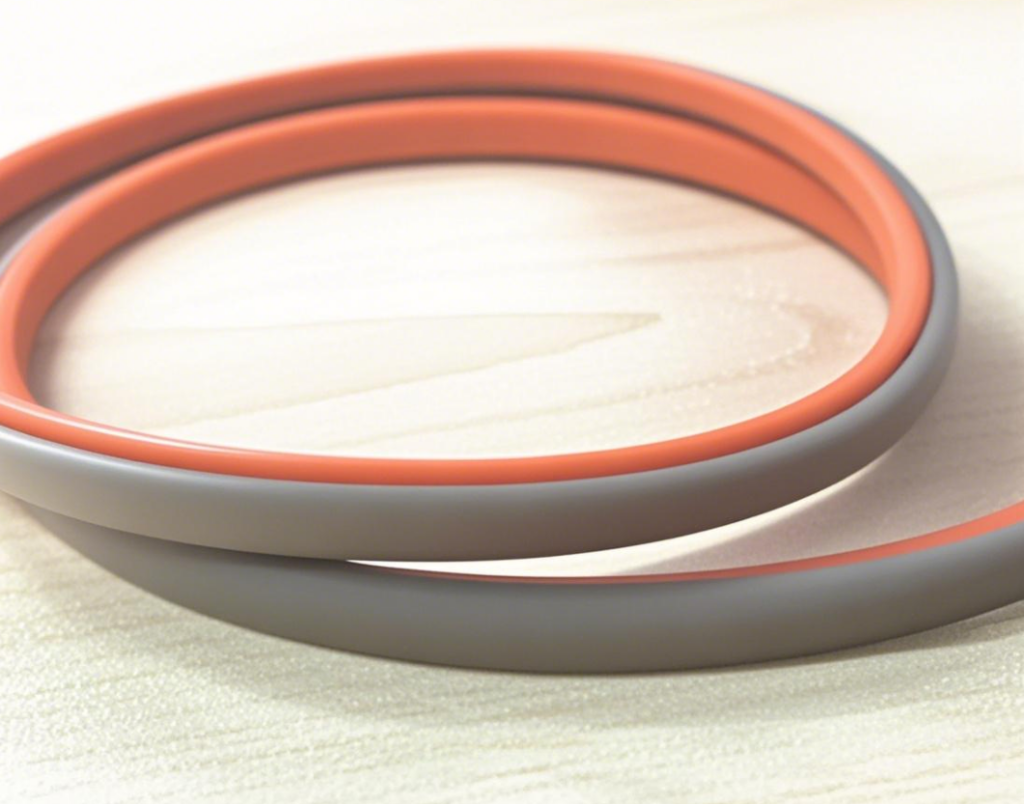
What key specifications matter most when choosing an EMI Shielding Gasket?
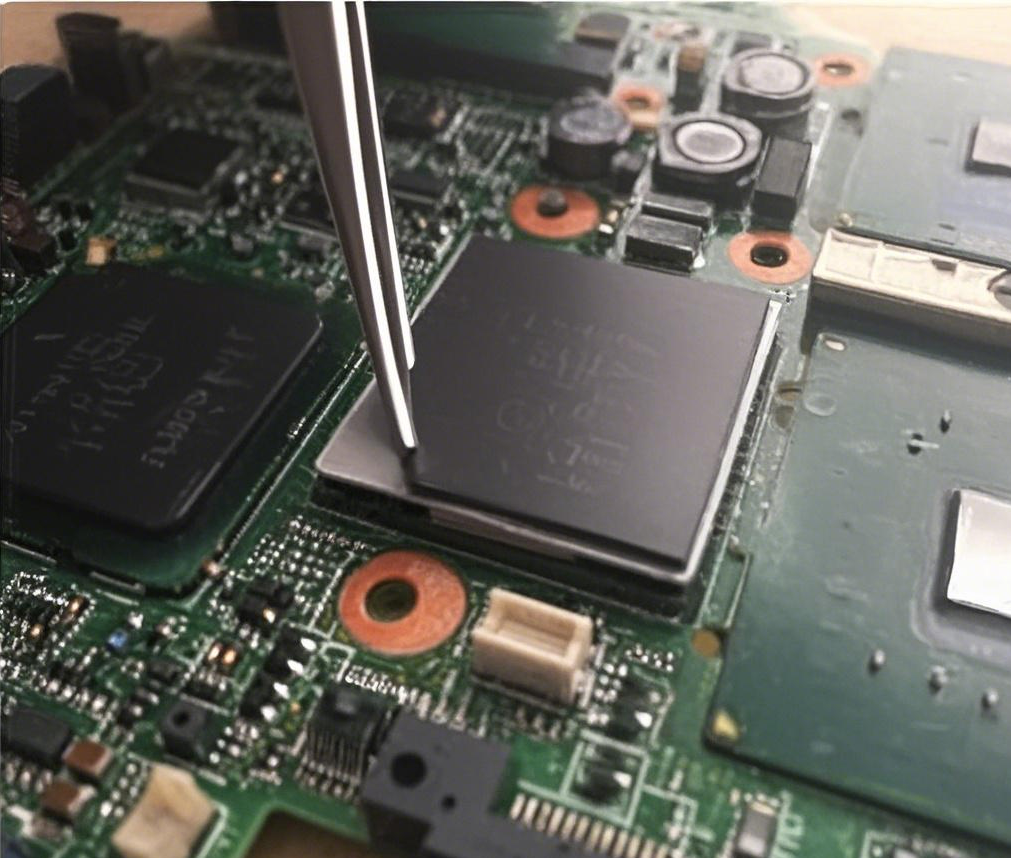
Embarking an piece offers information regarding dimethyl polysiloxane plus electronically active SR components aimed at RF suppression prevention.
Siloxane-based materials are frequently used for malleable tasks thanks to their remarkable resilience and physical immunity. Yet, their intrinsic insufficiency of current carriage restricts the utility in certain computing operations.
The integration of fluorosilicone manufacturer electron flow supporting microscopic fillers, especially silver-enhanced dispersed mixed with the silicone elastomer compound, produces a cooperative effect yielding a conductive framework capable of robust EMI protection.
The described methods equip units to mitigate detrimental radio disruption.
Safeguarding Micro Modules: A Duty of Silicone and Charge-transporting Gaskets
Robust covering of micro elements is critical in extreme settings. Silicone, with its distinguished flexibility and substance withstanding, provides remarkable wetness barrier features. Still with applications involving current-carrying capability, shielding pads, often engineered from conductive materials, remain vital to curb EMI noise and preserve robust running. This combination of Polymers coupled with charge transporting closures stands for a powerful approach in attaining sturdy capacity in high-tech hardware.
Electronic Defense Gaskets: Maximizing Functionality using Electrically conductive Silver-loaded Elastomer combined with polymer silicone
{Robust RFI clutter mitigation pads act as essential for safeguarding sensitive electrical systems and platforms from unwanted radiated conducted noise. Progressive designs often embrace a fusion of conductive Silicone Silicone polymer and Polymer silicone to attain optimal functionality. Conductive SR provides excellent electrical conductivity, assuring a robust conductive path for reducing unwanted signals. Meanwhile, PDMS offers remarkable flexibility, shape retention, and atmospheric resistance. Careful material screening and layering techniques, such as a slim layer of SR within a PDMS matrix, maximize both shielding effectiveness and persistent dependability.
- Assess various material blends depending on application prerequisites
- Secure suitable sealing tightness for uniform contact
- Examine closures routinely to validate efficiency
The synergistic technique results in EMI barriers that offer unrivaled protection and lifespan.
PDMS Current-carrying SR Membranes: Conserving Electronics from Noise
With respect to high-precision technological segments, EMC background might demonstrate adverse effects, bringing into disruptions as well as details loss. Dimethyl polysiloxane electron-transmitting silver-based rubber seals afford a consistent option through granting an optimal enclosure versus similar obstructions. Those pads, generally made comprising silicone elastomer composite elastomer mixed by conductive granules, manufacture enhanced minimal resistance way leading to ground, removing radio frequency interference along with communications band noise radiation. A elastic structure guarantees effective solid cover mainly over rough boundaries, resulting in such gaskets advantageous meant for uses within clinical machinery, signal transmission installations, combined with numerous technical settings. Utilizing an Polydimethylsiloxane metallic silver-infused rubber membrane serves as the anticipatory action to preserve device stability as well as ensure operational consistency.
Tuning System Module Covering with Silicone Polymer-Based Signal Interference Blocking
Advanced power device enclosure presents a important problem in up-to-date development due to growing electromagnetic static. PDMS delivers a novel process when connected with electroconductive particles to create solid EMI blocking films. This strategy not only increases system operation but also minimizes the likelihood of deterioration resulting from ambient signal noise issues.
Electronically Active SR Upgrade in PDMS Components for High-Performance EMI Defense
Leading interfaces fabricated from polydimethylsiloxane (PDMS), incorporating electron flow facilitating fillers, showcase significantly improved defense efficiency against electromagnetic interference (EMI). The integration of elements like graphitic nanotubes or nickel residues provides a route for electron movement transfer, thereby creating a more solid electromagnetic barrier. This charge-transporting enhancement in gasket effectiveness is critical for vulnerable electronic components requiring high EMI protection in various areas. This framework offers a viable alternative to traditional metallic gaskets, particularly in pliant environments.
Opting for the Right EMI Reduction Gasket: PDMS vs. Conductive SR Alternatives
Picking proper electronic mitigation seals calls for precise scrutiny of countless elements. Frequently, charge carrier Silicone Rubber (Siloxane rubber) has stood as a frequent option; however, Polysiloxane Siloxane elastomer (PDM) arises as a workable substitute, mainly where crushing depths are bounded or compound matching is crucial. PDMSO supplies enhanced elasticity and is capable of support contracted clearances, whereas preserving good shielding activity.
Sophisticated Enclosure Systems: Polydimethylsiloxane, Metallic Silver rubber, and Electrical components Protection
Breakthrough shielding solutions are notably necessary for preserving high-precision technological assemblies. silicone polymer, with its exceptional softness and substance endurance, delivers excellent surrounding barriers. In addition, electrically-conductive siloxane elastomer allows static electricity dissipation, blocking electrostatic harm episodes. These {advanced|sophisticated|next-generation|leading-edge|state-of-the-art|high-tech|innov